Medically Reviewed by Dr. Frederick Ballard, DDS on July 28, 2026
Getting kids to brush their teeth consistently ranks among the most common challenges parents face. Nagging rarely works, and battles over toothbrushes drain everyone’s energy, but a well-designed reward system can turn this daily struggle into a routine that children actually look forward to. The most effective systems match the reward to a child’s age, stay consistent day to day, and gradually fade out once brushing becomes an automatic habit rather than something tied to a prize.
At Kool Koala Pediatric & Adolescent Dentistry, we help families across Collingswood, Deptford, Bear, Vineland, Pennsville, and Willingboro build strong oral hygiene habits from a child’s very first tooth. Our approach to pediatric dentistry treats motivation as seriously as technique, because a child who dreads brushing will not keep it up no matter how well they were taught. We work with parents every day to design reward strategies that fit their child’s personality and fade naturally as good habits take hold.
Understanding What Drives Children’s Behavior
Different ages respond to different motivators. Toddlers and preschoolers thrive on immediate rewards and visual progress markers because abstract concepts like future health do not hold much meaning yet. Sticker charts, colorful progress trackers, and small daily celebrations work well for this age group because they provide instant feedback.
School-age children start developing longer-term thinking and respond to systems that track progress over days or weeks. They enjoy earning points toward bigger rewards and take pride in maintaining streaks. Friendly competition with themselves or a sibling can drive consistency, as long as it stays encouraging rather than stressful.
Teenagers need a different approach entirely. They care more about appearance and social confidence than parental approval, so linking oral care to fresh breath and a confident smile resonates more than charts or prizes. Teens also resist systems that feel childish but respond well to choices that put them in control of their own routine.
Why Reward Systems Work
Reward-based approaches are not just a parenting trick. A 2025 systematic review published in the Journal of Medical Internet Research found that gamified oral health interventions, ones that use rewards, progress tracking, and interactive feedback, led to better brushing habits and more consistent preventive dental visits among children compared to non-gamified approaches. Both digital and non-digital reward systems showed improved participation when children could see their own progress clearly.
Research on incentive-based habit building also suggests the benefits can outlast the reward itself. Programs that pair small incentives with consistent tracking appear to help children build self-directed habits that continue even after the rewards are phased out, which is the ultimate goal of any reward system. The reward is meant to be a bridge to the habit, not the destination.
Effective Reward Systems That Actually Work
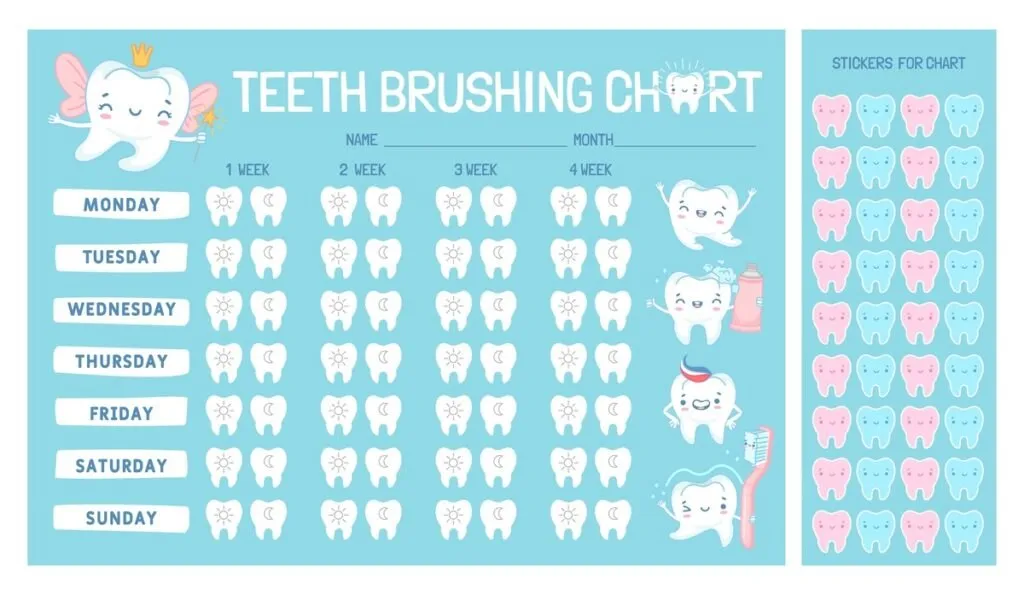
Chart-based systems remain popular because they provide clear visual feedback. A simple calendar where kids place a sticker after each brushing session creates tangible proof of their efforts. Parents can establish milestones like earning a small prize after filling a full week or completing an entire month without missing a session.
Point systems offer more flexibility than charts. Kids earn points for brushing twice daily, and those points accumulate toward rewards of varying sizes. This structure teaches delayed gratification while maintaining motivation through incremental progress.
Choice-based rewards let kids pick from a menu of approved options when they hit targets, rather than parents deciding prizes on their own. This autonomy increases buy-in and makes rewards feel more meaningful, whether that means extra screen time, staying up a few minutes later, or picking the weekend family activity.
Rewarding Without Candy
Many families default to candy as a reward, but sugary treats work against the very habit you are building. Non-food incentives protect your child’s teeth while still providing the motivation kids need to stay consistent, and understanding how sugar affects your child’s developing teeth makes it easier to see why food-based rewards can work against you.
Consider these candy-free reward ideas:
- A treasure box of small toys, stickers, or temporary tattoos for reaching a weekly goal
- Extra playtime, a later bedtime by a few minutes, or a favorite bedtime story
- A homemade certificate or badge displayed somewhere visible, like the refrigerator
- A special outing or family activity once a bigger goal, such as a full month of consistent brushing, is reached
Rotating between a few of these options keeps the system fresh without requiring an ever-growing prize budget.
Making Brushing Fun Without Relying on Rewards
Music transforms brushing from a chore into an activity. Playing a favorite two-minute song signals exactly how long kids need to brush while making the time pass enjoyably. Some families create brushing playlists that rotate through different songs to keep things fresh.
Technology offers engagement for tech-savvy kids. Apps designed for children turn brushing into games, awarding virtual prizes for consistent timing and technique, and some electric toothbrushes connect to apps that track progress and provide feedback. The American Dental Association recommends brushing twice daily, and these tools help kids meet that standard while staying entertained.
Storytelling makes brushing time more engaging. Parents can create continuing stories that only get told during tooth brushing, with each session revealing the next chapter. Kids who resist brushing often cooperate when they are eager to hear what happens next in an ongoing adventure.
Avoiding Common Reward System Mistakes
Excessive rewards undermine intrinsic motivation. When prizes become too elaborate or frequent, children brush only for the reward rather than understanding why dental care matters. Keep rewards modest and gradually space them further apart as habits solidify.
Inconsistent enforcement destroys credibility. If parents forget to mark charts, fail to deliver promised rewards, or randomly decide not to count certain brushing sessions, kids lose trust in the system. Consistency matters more than perfection, and when tracking slips, it helps to acknowledge it and restart rather than abandoning the system entirely.
Punishment for missed brushing creates negative associations with dental care. Reward systems work best when they focus on celebrating successes rather than penalizing failures, so if a child forgets to brush, help them understand why it matters and encourage them to do better tomorrow.
Keeping the Whole Family Involved
When more than one child shares a household, friendly family challenges can add energy to the routine. Track everyone’s brushing on the same chart and celebrate the whole family’s progress together rather than pitting siblings against each other. Parents who brush alongside their kids and mark their own progress on the chart reinforce that oral care matters at every age, and these consistent habits also make future dental exams and cleanings smoother for everyone.
Building Long-Term Habits at Kool Koala Pediatric & Adolescent Dentistry
Sustainable oral health habits develop through consistent positive reinforcement paired with professional guidance during childhood and adolescence. Dr. Ballard and our team at Kool Koala Pediatric & Adolescent Dentistry partner with families to build these routines from a child’s first appointment onward. We provide age-appropriate education during every visit, explaining why brushing matters in terms children can understand, and we make appointments a positive experience so kids build lasting comfort with dental care.
If your child is struggling with brushing, checking in with our team at their next visit is a good place to start. We can help tailor a reward system to your child’s age and personality and check that their technique is protecting their teeth as they grow. Schedule an appointment to get personalized guidance for your family.
Frequently Asked Questions About Reward Systems for Brushing
What age should I start using a reward system for brushing?
Most children respond well to reward systems by around age two or three, once they can understand simple cause and effect and enjoy earning something for their efforts. Toddlers do best with immediate, visual rewards like stickers, while older children can handle point systems that build toward a bigger prize over time. There is no single right age to start, so watch for your child showing interest in the process itself before introducing a formal system.
Should rewards ever include candy or sugary treats?
We recommend avoiding candy and sugary treats as brushing rewards, since they work against the oral health habit you are trying to build. Non-food incentives like stickers, extra playtime, small toys, or family activities provide the same motivation without adding to your child’s sugar intake. Choosing rewards unrelated to food also helps kids separate the idea of achievement from the idea of a sweet treat, which supports healthier habits overall.
How long should a reward system last before we phase it out?
Most children need a reward system for a few months to a year before brushing becomes automatic, though this varies by child. A good sign that it is time to phase out rewards is when your child brushes consistently even on days you forget to track it. Space out rewards gradually rather than stopping all at once, and continue offering praise and encouragement even after the formal system ends.
What if my child loses interest in the reward system?
Losing interest is common and usually means the system needs a refresh rather than abandonment. Try changing the reward options, updating the chart design, or switching from a sticker chart to a point system as your child gets older. If a child consistently resists brushing despite changes to the reward system, it is worth mentioning at their next dental visit so our team can help identify what might be going on.
Can siblings share the same reward system?
Siblings can absolutely share a reward system, and doing so often adds motivation through friendly teamwork. Track each child’s progress on the same chart or board and celebrate the whole family’s consistency together rather than comparing one child’s performance to another’s. This approach keeps the focus on building good habits rather than creating competition that could discourage a child who is still learning.
About the Author
Pediatric Dentist, Kool Koala Pediatric & Adolescent Dentistry
Dr. Ballard is a pediatric dentist with Kool Koala Pediatric & Adolescent Dentistry, treating children and adolescents across New Jersey and Delaware and helping families build positive, lasting relationships with dental care from a child’s first visit onward.