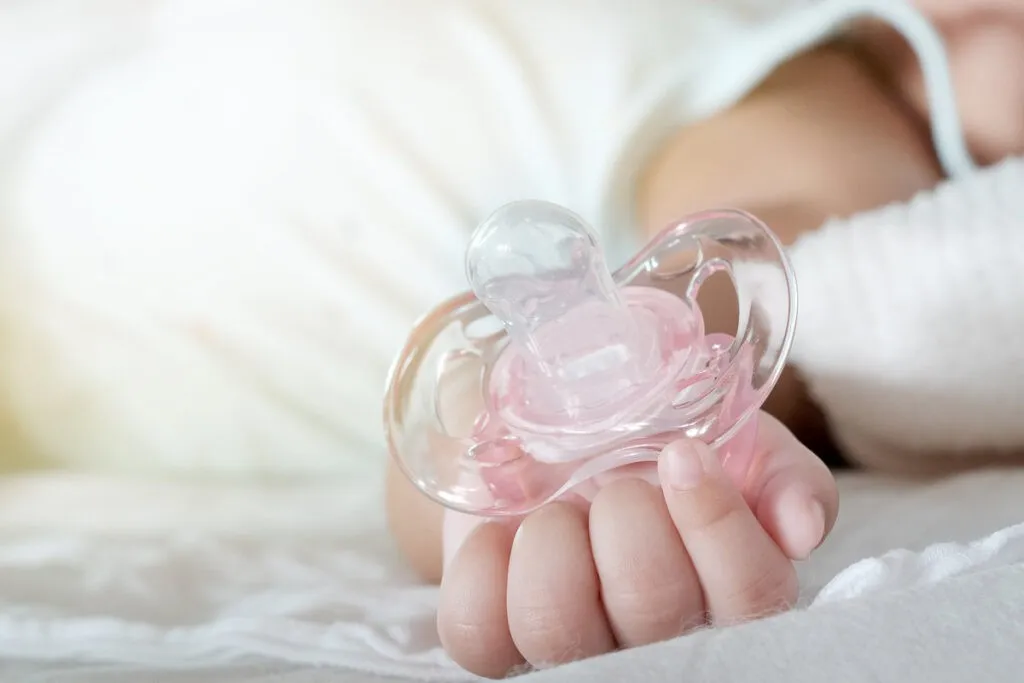
Pacifiers calm fussy babies and help them fall asleep, and most children can use one safely through infancy with no lasting effect on their teeth. The real question for most parents is not whether pacifiers are safe, but when to start weaning, since dental risks climb the longer use continues past the toddler years.
At Kool Koala Pediatric & Adolescent Dentistry, we help families across New Jersey and Delaware time the transition well. Our pediatric dentistry team watches for the early signs that pacifier use is starting to affect a child’s bite, so parents do not have to guess on their own.
Why Pacifiers Help in the First Place
Sucking is one of the first reflexes babies are born with, and pacifiers satisfy that need while helping many self-soothe and settle for naps or bedtime. Research suggests pacifier use during sleep may lower the risk of sudden infant death syndrome. Unlike thumb sucking, a pacifier can simply be taken away when the time comes, giving parents more control over weaning.
When Pacifier Use Starts Affecting Your Child’s Teeth
Problems typically emerge after age two or three, once extended use begins shaping how teeth and jaws develop. Constant pressure can push front teeth forward into an open bite, where the upper and lower front teeth do not meet, and it can narrow the upper palate, leading to crowding that may need orthodontic treatment later. A 2025 scoping review of pacifier research found that risk and severity rise with how long, how often, and how intensely a child uses a pacifier, with use beyond three years carrying the highest odds of needing treatment. Prolonged use has also been linked to speech delays and a higher chance of middle ear infections.
The Best Age to Start Weaning
Most pediatric dentists recommend starting to limit pacifier use between 18 and 24 months and stopping entirely by age three at the latest. Children who use a pacifier only for sleep or brief comfort generally develop fewer dental issues than those who keep one in their mouth throughout the day. If you notice the front teeth starting to protrude, the bite no longer closing evenly, or changes in how the back teeth fit together, schedule a dental exam to check for early signs of a problem.
How to Wean Your Child Off a Pacifier
Gradual reduction tends to create less drama than stopping all at once, especially for toddlers who lean on the pacifier for comfort. Try easing out use in stages before removing it completely.
- Daytime elimination: remove the pacifier during waking hours first, keeping it for sleep only
- Location restrictions: allow it only in the bedroom or car, not throughout the house
- Activity-based limits: no pacifier during meals, playtime, or screen time
- Time-based reduction: shorten how long your child can use it each day
- Reward systems: offer praise or small rewards for pacifier-free stretches
Some families also use a “pacifier fairy” ritual, similar to the tooth fairy, to help older toddlers feel good about giving it up.
Alternative Comfort Methods
Since pacifiers mainly serve a comfort function, replacing that function makes weaning easier. A special blanket or stuffed animal can provide security without affecting dental development, and a calming bedtime routine of stories or quiet music gives your child another way to settle in.
Frequently Asked Questions About Pacifiers and Baby Teeth
Are pacifiers bad for my baby’s teeth
Pacifiers are not harmful during infancy and early toddlerhood when used appropriately. Risk rises when use continues past age two or three, especially if it is frequent and forceful throughout the day.
At what age should I take away my child’s pacifier
Most pediatric dentists recommend limiting use around 18 to 24 months and stopping entirely by age three. Starting the weaning process gradually tends to make the transition easier for most children.
Can dental changes from pacifier use be reversed
In many cases, yes. Minor alignment issues in baby teeth often self-correct after the habit stops, though changes that persist once permanent teeth arrive may need orthodontic treatment.
Is an orthodontic pacifier better for teeth
Orthodontic pacifiers use a flattened shape meant to reduce pressure on the palate, and some evidence suggests fewer alignment issues, though any pacifier used beyond the recommended age can still affect development.
Kool Koala Pediatric & Adolescent Dentistry Can Guide Your Weaning Timeline
Pacifiers serve a real purpose in infancy, but knowing when to wean prevents lasting dental problems. Our team at Kool Koala Pediatric & Adolescent Dentistry sees families throughout New Jersey and Delaware and assesses how pacifier use is affecting each child’s bite, offering practical guidance at every stage. We can also recommend habit-breaking appliances if your child needs extra support stopping the habit.
Regular visits starting around age one help us track your child’s development and catch changes early, before they become harder to correct. You can request an appointment with our team to talk through the right timeline for your child.