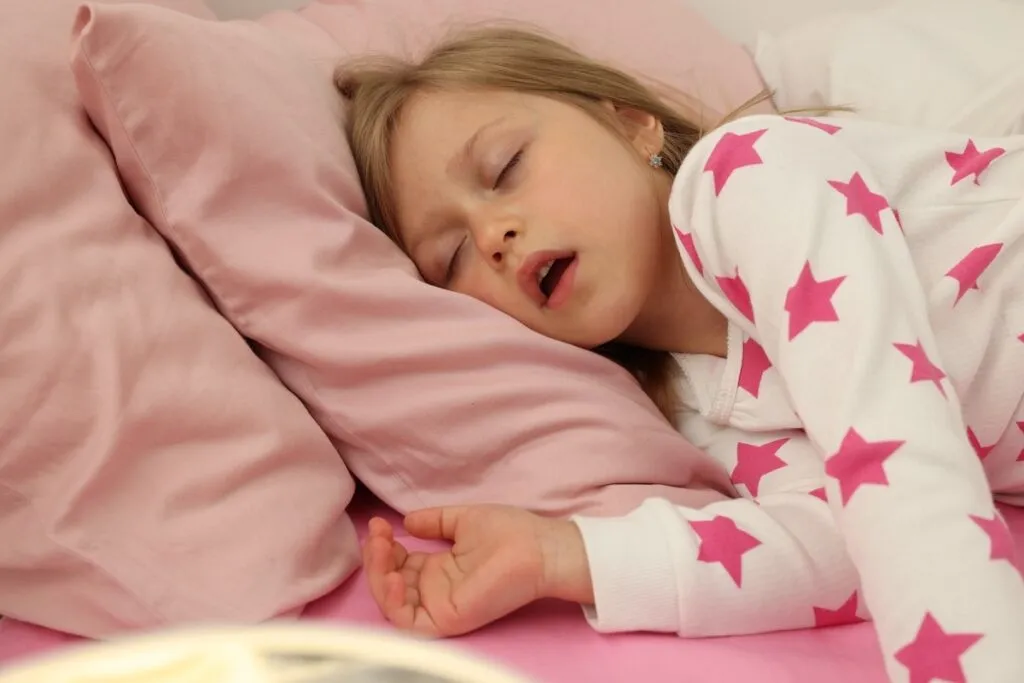
A child who sleeps with their mouth open, snores, or breathes through the mouth during the day is not just picking up an odd habit. It can signal an airway or structural issue that affects sleep, facial growth, and dental health, especially when it happens every night rather than just during a cold.
At Kool Koala Pediatric & Adolescent Dentistry, our pediatric dentistry team looks beyond cavities to how a child breathes, since the two are more connected than most parents expect. We see families across New Jersey and Delaware and help identify mouth breathing early, before it starts shaping how a child’s face and bite develop.
Signs Your Child May Be a Mouth Breather
Mouth breathing is easy to miss during the day but usually shows up clearly at night. Watch for an open-mouth sleeping posture, loud or frequent snoring, dry or cracked lips in the morning, and unusual thirst overnight. Daytime fatigue, trouble concentrating at school, and irritability can also point back to poor sleep caused by breathing through the mouth rather than the nose.
Why Does Mouth Breathing Happen
Enlarged tonsils or adenoids are a common cause, since they can partially block the airway and force a child to keep their mouth open to get enough air. Chronic nasal congestion from allergies, sinus infections, or frequent colds often leads to the same pattern, and some children keep the habit even after congestion clears. Structural issues such as a deviated septum, narrow nasal passages, or a bite that does not let the lips close comfortably can also play a role, and orthodontic evaluation can sometimes address the jaw development side of the problem.
How Mouth Breathing Affects Development
Persistent mouth breathing does more than disrupt sleep. Tongue position against the roof of the mouth helps shape the upper jaw during growth, and mouth breathing interrupts that process, which over time can contribute to a narrower palate, a longer facial profile, and changes in how the teeth align. A 2025 review of pediatric mouth breathing research links the habit to open bite, posterior crossbite, and reduced attention span from poor sleep quality. Saliva also protects teeth from decay, and a mouth kept dry from breathing through it raises the risk of cavities and gum inflammation.
Solutions and Treatment Options
Treatment depends on the underlying cause, so identifying it comes first. An ear, nose, and throat specialist may recommend removing enlarged tonsils or adenoids, while allergy treatment or medication can open nasal passages when congestion is the driver. Myofunctional therapy teaches children exercises that retrain tongue posture and breathing patterns, and some children benefit from a palatal expander or airway-focused orthodontic treatment during active growth, which creates more room for nasal breathing. Simple daytime reminders to close the lips and breathe through the nose can also help build the habit back.
Mouth Breathing Frequently Asked Questions
Is mouth breathing in children always a problem
Not always. Occasional mouth breathing during a cold or allergy flare is common and usually resolves on its own. A daily pattern, especially during sleep, is what warrants a closer look.
Can a pediatric dentist help with mouth breathing
Yes, pediatric dentists are often the first to notice signs like dry mouth, tooth wear, or jaw alignment changes linked to mouth breathing, and can coordinate care with an ENT or allergist when needed.
Can mouth breathing affect how my child’s face develops
Over time, yes. Chronic mouth breathing can influence jaw growth and facial shape because tongue posture plays a role in shaping the upper palate during development.
What should I do if I notice my child mouth breathing every night
Schedule an evaluation with a pediatric dentist. They can check for airway, allergy, or structural causes and refer you to a specialist if the situation calls for one.
Kool Koala Pediatric & Adolescent Dentistry Can Help With Mouth Breathing Concerns
Early evaluation makes a real difference in outcomes for children who breathe through their mouth regularly. Our team at Kool Koala Pediatric & Adolescent Dentistry looks for signs of mouth breathing during routine visits and coordinates with ENT specialists and allergists when a child needs broader care.
If you have noticed snoring, open-mouth sleeping, or daytime fatigue in your child, you can request an appointment with our team to talk through what might be going on.