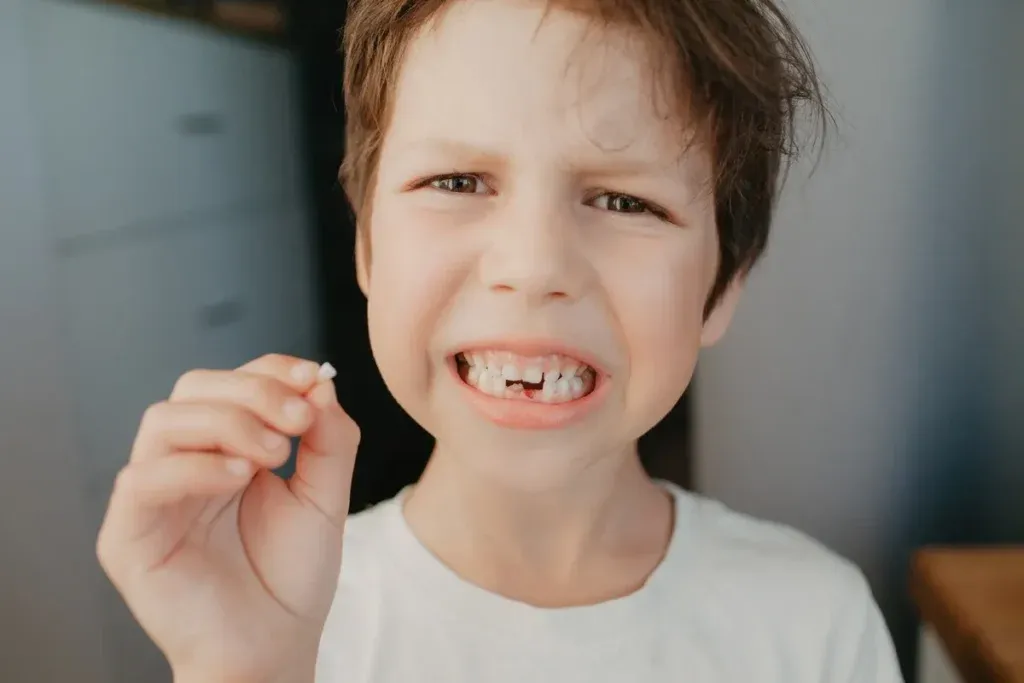
Finding a tiny tooth on the floor or hearing your child say one came out unexpectedly can stop any parent in their tracks. Baby teeth are not just placeholders; they actively guide permanent teeth into position, preserve jaw spacing, and support healthy speech development. When a baby tooth falls out too early, due to decay, injury, or extraction, the surrounding teeth can begin to drift into the empty space and make it harder for the permanent tooth waiting underneath to erupt properly.
At Kool Koala Pediatric & Adolescent Dentistry, we help families across New Jersey understand what early tooth loss means for their child’s development and what steps to take next. Our team works closely with parents to monitor tooth spacing, evaluate whether intervention is needed, and create a plan that protects each child’s growing smile. If your child has lost a baby tooth before it was time, here is what you need to know about space maintainers and how we may be able to help.
Why Baby Teeth Matter More Than You Might Think
Baby teeth do a lot of work before they ever fall out naturally. Each tooth holds space in the jaw for the permanent tooth developing beneath it, helping to guide that adult tooth into the correct position when the time comes. When that guidance disappears too early, neighboring teeth can gradually shift toward the gap.
What Happens When Space Is Lost
This shifting happens quietly over weeks and months, often without any visible signs until the permanent tooth begins to erupt. According to a systematic review and meta-analysis published in PMC, the premature loss of primary molars can lead to a reduction in arch length and adjacent tooth migration, which may result in crowding, misalignment, or impaction of permanent teeth. The earlier a baby tooth is lost relative to when the permanent tooth is due, the greater the risk of space loss.
Common Causes of Early Baby Tooth Loss
Several factors may lead to a baby tooth coming out before it should. Tooth decay is the most frequent cause, particularly when cavities are left untreated and the tooth cannot be saved. Dental injuries from falls, sports, or accidents can also knock out or fracture a tooth beyond repair. In some cases, a tooth may need to be extracted during a common dental procedure due to infection or structural damage. Understanding the cause helps us determine the best path forward for your child.
What Is a Space Maintainer?
When a baby tooth is lost early, a space maintainer may be recommended to hold the gap open until the permanent tooth is ready to come in. This small appliance, typically made of metal, attaches to the teeth on either side of the empty space and prevents them from drifting inward.
Types of Space Maintainers
Space maintainers come in fixed and removable versions, and the right choice depends on which tooth was lost, your child’s age, and how long until the permanent tooth is expected. Fixed options, like band and loop appliances, are the most common and are cemented onto a neighboring tooth for stability. Removable options work more like a retainer and may suit older children who can manage the device responsibly. We evaluate each child individually to determine which type makes the most sense for their situation.
How Long Does a Child Need One?
A space maintainer stays in place until the permanent tooth begins to erupt and no longer needs a guide. That timeline varies by child and by which tooth was lost, but it can range from several months to a couple of years. During this period, we recommend keeping up with regular dental exams and cleanings so we can monitor the appliance and track the progress of the incoming tooth. If the device becomes loose or damaged, it should be addressed promptly to avoid any unintended shifting.
How to Protect Your Child’s Teeth Going Forward
Whether or not a space maintainer is needed, taking steps to protect your child’s remaining teeth is essential. Keeping up with routine cleanings and checkups allows us to catch and treat decay before it ever reaches the point of tooth loss. If your child plays sports, a properly fitted mouth guard can significantly reduce the risk of injury-related tooth loss. Teaching your child good brushing and flossing habits at home rounds out a strong foundation for long-term dental health.
It is also worth knowing that not every early tooth loss requires intervention. Whether a space maintainer is needed depends on several factors, including which tooth was lost, your child’s dental age, and how much time remains before the permanent tooth is expected. This is why reaching out promptly after early tooth loss matters; acting quickly gives us the most options.
Trust Kool Koala Pediatric & Adolescent Dentistry with Your Child’s Smile
Kool Koala Pediatric & Adolescent Dentistry was built around one core belief: every child deserves comfortable, compassionate dental care in an environment that feels fun rather than frightening. Our team of providers brings a wealth of pediatric training and a genuine commitment to treating each patient as an individual, taking the time to understand your child’s specific needs and communicating clearly with you every step of the way.
If your child has lost a baby tooth earlier than expected, do not wait to find out if space is being affected. The sooner we evaluate the situation, the more effectively we may be able to preserve proper spacing and support healthy development. Reach out to us today through our appointment request form to schedule a visit and take the next step toward protecting your child’s smile.